
PERSEI Space advances towards the in-orbit demonstration of electrodynamic tether technology
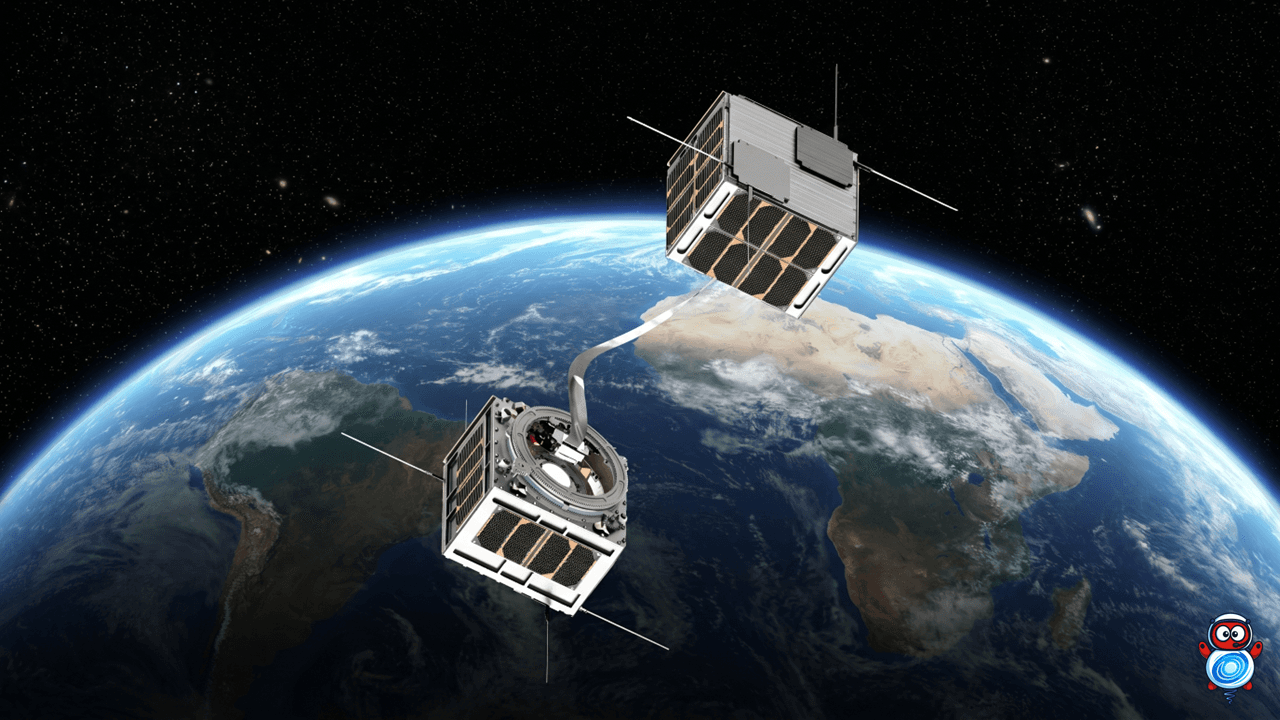
The flight-ready E.T.PACK-F deorbit device was completed in December 2025; the demonstration flies in 2027
PERSEI Space completed its flight-ready deorbit device based on electrodynamic tether technology in December 2025, through the E.T.PACK-F project. The in-orbit demonstration is planned for 2027, with launch coordinated through AVIO and supported by an ESA/EC Flight Ticket Initiative.
The E.T.PACK mission represents six years of sustained development across two European Innovation Council funded projects totalling more than €5.5 million. The first project (2019-2022) advanced the technology to TRL 4; E.T.PACK-F (2022-2025) raised it to TRL 8, flight-ready status.
The deorbit device is a 12U satellite weighing under 20 kg, built as two modules connected by a 420-metre aluminium electrodynamic tether, 2.5 cm wide and 40 microns thick. It works by generating a Lorentz force through interaction with Earth's magnetic field and ionospheric plasma, progressively lowering orbital altitude without consuming any propellant.
The European consortium comprises Universidad Carlos III de Madrid as project coordinator, Università degli Studi di Padova, Technische Universität Dresden and Sener Aerospace & Defence. PERSEI Space joined as mission lead in 2024.
The demonstration will validate tether deployment along the local vertical and measure electric current as a function of plasma density: the first flight of a bare electrodynamic tether equipped with a hollow cathode. The satellite will operate at 550 km altitude for approximately three months.
PERSEI Space has also manufactured a dummy unit replicating the flight model's mass properties, to confirm launcher compatibility and to serve as a backup payload. This non-functional hardware was produced at TU Dresden's machining laboratory.
Findings from the mission will inform PEARSON, PERSEI Space's first commercial product: an autonomous, propellant-free deorbit device for integration on new spacecraft and for active debris removal.