
PERSEI Space Receives the ESA FIRST! Sustainability Award at ESA Headquarters in Paris
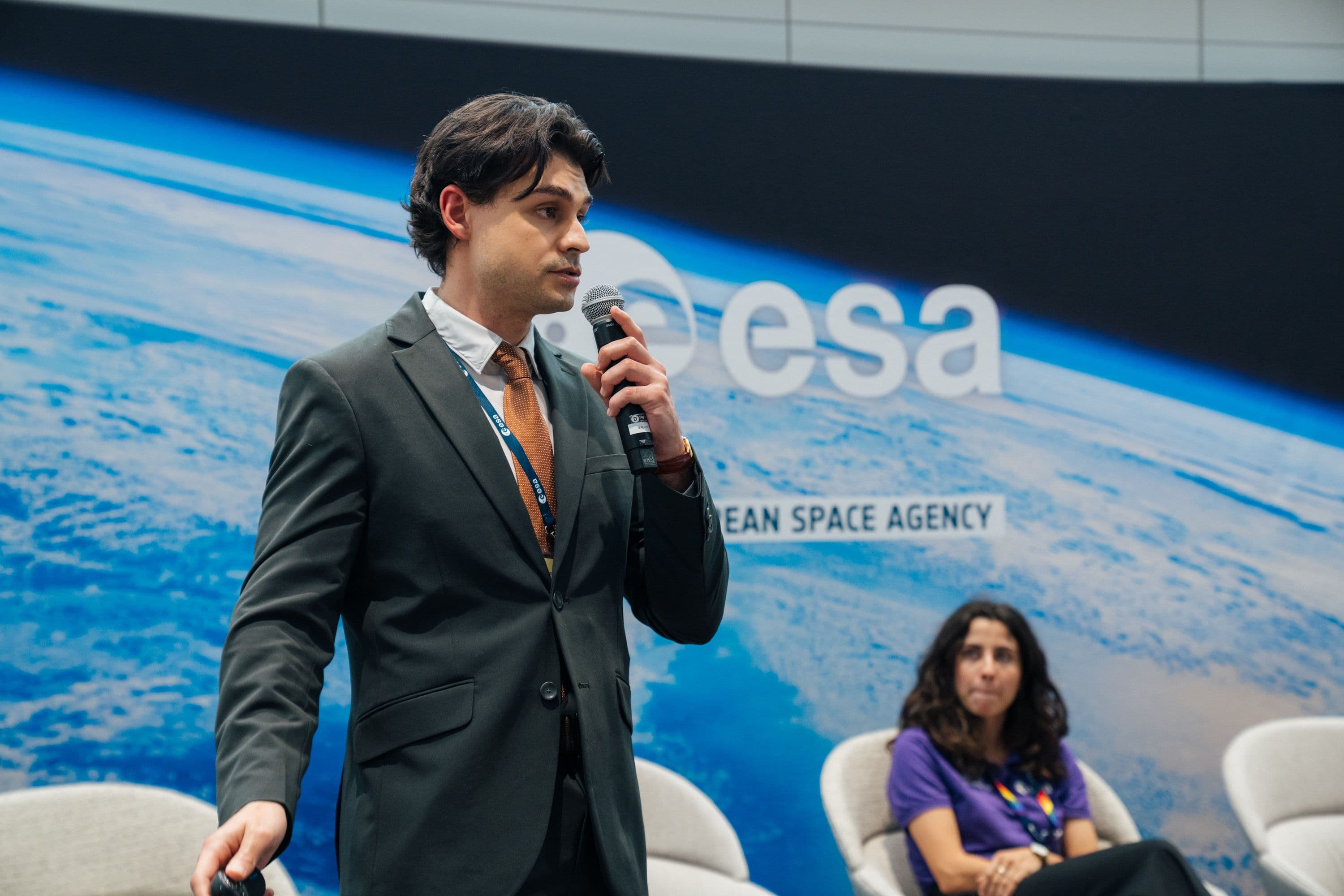
Recognition for ECO-Tethers, the ESA-funded study on propellant-free technologies for in-space propulsion and deorbiting
A milestone for PERSEI Space and the European space sustainability community. PERSEI Space is proud to announce that it has received the ESA FIRST! Sustainability Award, presented at the European Space Agency Headquarters in Paris, France. The award recognises ECO-Tethers, an ESA-funded system study on propellant-free technologies for in-space propulsion and deorbiting using electrodynamic tethers, developed in collaboration with Thales Alenia Space Italy and Astroscale France.
The recognition was formally presented during the ESA Future Space Transportation Spring Session, a gathering that brought together ESA experts, Member State delegations, industry partners, and investors to review progress across Europe's space transportation landscape. The event, organised by ESA's Future Launchers Preparatory Programme (FLPP), drew record attendance, with over 200 participants at ESA HQ and many more joining online.
Award ceremony: Jesús Manuel Muñoz Tejeda (PERSEI Space) receiving the ESA FIRST! Sustainability Award at ESA Headquarters, Paris, alongside members of the ESA Future Space Transportation team. Photo credits: ESA/Motion3.
ECO-Tethers: propellant-free technologies for a sustainable orbital future. ECO-Tethers is a 12-month system study funded under ESA's FIRST! Technologies in Sustainability for Future Space Transportation programme (ITT 1-12998). Led by PERSEI Space as prime contractor, the study brings together Thales Alenia Space Italy's system integration expertise and Astroscale France's operational experience in in-orbit servicing and debris mitigation missions.
The study assesses how electrodynamic tethers (ETs) can deliver orbit clearance and in-space mobility without relying on onboard propellant. Electrodynamic tethers are conductive ribbons deployed in orbit that interact with the Earth's magnetic field and ionospheric plasma to generate a Lorentz force, producing drag or thrust without consuming fuel. This approach can enable lighter, more cost-efficient systems for a range of applications, from end-of-life deorbiting to in-orbit servicing, active debris removal, and propellant-free station-keeping.
The five use cases explored by ECO-Tethers are satellite deorbiting for compliant end-of-life disposal; launcher upper-stage and mission-related object deorbiting to accelerate orbit clearance; propellant-less propulsion for satellites and space ferries; in-orbit servicing vehicles with reduced propellant dependence; and Active Debris Removal using autonomous "deploy-and-leave" electrodynamic tether kits that allow a single servicing vehicle to address multiple debris targets in sequence.
"ECO-Tethers represents a key step in showing that sustainability in orbit is not only a regulatory requirement, but a technological opportunity to rethink how space systems are designed, operated, and responsibly disposed of," said Jesús Manuel Muñoz Tejeda, CEO and Co-Founder of PERSEI Space.
During the ESA Spring Sustainability Session, Jesús Manuel Muñoz Tejeda, CEO and Co-Founder of PERSEI Space, had the opportunity to present the ECO-Tethers project to the wider European space transportation community and to discuss how propellant-free propulsion based on electrodynamic tethers can contribute to two areas that will strongly shape the space sector over the coming decade: space debris mitigation and in-orbit servicing.
The session also included a dedicated workshop on the carbon footprint of different space propellants and the potential sustainability benefits of propellant-free technologies. Growing momentum around electrodynamic tether technology reflects decades of research, heritage missions, and the sustained work of the global community to raise the technology readiness level of this approach as a practical solution for more sustainable space operations.
Group photo of participants at the ESA FIRST! Spring Sustainability Workshop, ESA Headquarters, Paris. Photo credits: P. Sebirot/ESA. ESA Commercialisation Gateway.
PERSEI Space is a deep-tech startup and spin-off from Universidad Carlos III de Madrid (UC3M), founded in 2023 and currently incubated at ESA-BIC Madrid. The company develops propellant-free deorbiting and in-space propulsion products based on electrodynamic tether technology, addressing two of the most pressing challenges in the space sector: space debris mitigation and the growing demand for in-orbit servicing.
PERSEI Space is the prime contractor of ECO-Tethers and leads the 2027 in-orbit demonstration of the E.T.PACK-F deorbiting system. The company is also a signatory of ESA's Zero Debris Charter and leads the charter's Technical Domain 2 coordination activities.
For more information about PERSEI Space and its technology, visit www.perseispace.com or contact the team directly.